


All posts
Safeguarding Concerns During Staff Supervision
Spot safeguarding concerns during staff supervision early, record them accurately and create the evidence managers need to act promptly with confidence.
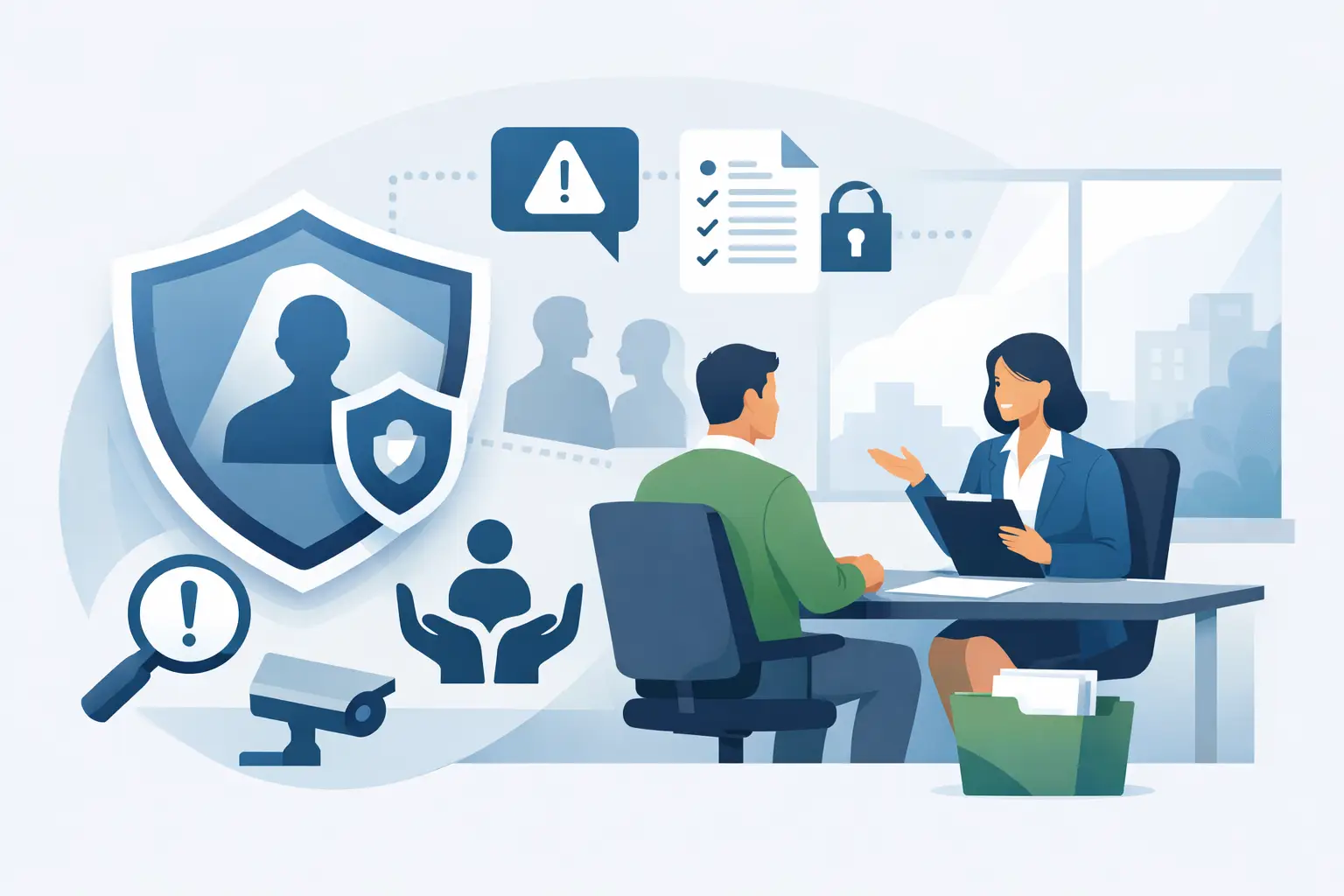
Spot safeguarding concerns during staff supervision early, record them accurately and create the evidence managers need to act promptly with confidence.
A staff member says they are worried about a resident's unexplained bruising. Another admits they have not felt confident using a piece of moving and handling equipment. A third describes a colleague speaking to someone in a way that made them uncomfortable. Safeguarding concerns during staff supervision rarely arrive as neat, fully formed disclosures. More often, they emerge in passing - and what happens next matters.
Let's be honest: a supervision meeting cannot replace a formal safeguarding process. It should not become an investigation, either. But it is one of the few protected spaces where managers can listen properly, test understanding, identify patterns and respond before a concern becomes a serious incident.
The problem is that conventional supervision records often fail at the point they are most needed. Notes are written days later, reduced to a vague sentence such as “safeguarding discussed”, or filed without a clear account of what was said, what action was agreed and who was responsible. That is not meaningful assurance. It leaves staff unsupported and makes it difficult to demonstrate sound governance when a regulator asks how concerns were identified and managed.
Frontline staff do not always recognise an issue as a safeguarding concern at first. They may frame it as a difficult shift, a concern about a person's mood, uncertainty over professional boundaries or a feeling that something was “not right”. Supervision gives a manager the time to explore that uncertainty without rushing to judgement.
It also reveals risks that are less likely to appear in incident systems alone. Repeated missed observations, unsafe medication practice, poor recording habits, distressing interactions, gaps in competence and staff fatigue can all affect people's safety and dignity. A single conversation may not establish what has happened, but it can show where further action is needed.
This is particularly valuable in domiciliary care, where staff often work alone, and across larger services where managers cannot observe every interaction directly. The quality of supervision becomes part of the service's early-warning system.
That does not mean every concern belongs in the supervision record in full detail. It depends on the nature and urgency of the issue. A record should evidence that the concern was heard, the appropriate route was followed and the staff member was supported. Sensitive personal detail should be limited to what is necessary, with information handled in line with organisational policy and UK data protection requirements.
The first task is to create enough psychological safety for the staff member to speak honestly. Start with open questions: What have you seen? What worries you? When did this happen? Who have you already told? Avoid leading the person towards a conclusion, minimising what they say or promising absolute confidentiality. Explain that information may need to be shared to keep people safe.
If someone may be at immediate risk of harm, the supervision agenda stops. Follow the service's safeguarding and escalation procedures, seek urgent support where required and make sure the person is safe. The discussion can be documented afterwards, but timely action cannot wait for polished notes or the next management meeting.
For concerns that are not immediately urgent, be clear about the next step. That may mean reporting to the designated safeguarding lead, seeking advice, checking a staff member's competence, beginning a management process or escalating through local arrangements. Do not leave a member of staff with a vague instruction to “keep an eye on it”. Agree who will do what, by when, and how the outcome will be reviewed.
Good supervision helps staff distinguish between what they saw or heard, what they were told and what they think it might mean. This protects the integrity of any later enquiry and helps managers make proportionate decisions.
For example, “I noticed Mrs Khan had a new mark on her arm at 8am and she appeared withdrawn” is an observation. “A colleague must have caused it” is an assumption. Both may be relevant, but they should not be recorded as though they carry the same evidential weight.
The manager's role is not to solve every uncertainty in the room. It is to listen carefully, clarify the account and ensure the concern reaches the right person through the right route.
A useful supervision record does more than show that safeguarding was mentioned. It creates a clear account of professional reasoning and action. If an inspector, senior leader or safeguarding partner reviews it later, they should be able to understand the concern, the response and the follow-up without relying on memory.
That normally means capturing the staff member's own words where they are material, alongside the manager's questions, the advice given, agreed actions and review date. It should also show when a matter was escalated outside supervision and avoid duplicating confidential material that belongs in a separate safeguarding record.
Generic templates make this harder than it needs to be. A tick box labelled “safeguarding discussed” cannot show whether the staff member understood their duty, raised a concern or needed additional support. Nor can a short retrospective summary reliably preserve the nuance of a sensitive conversation.
This is where accurate transcription and structured analysis can make a practical difference. 1two.one records a supervision conversation, produces a speaker-labelled verbatim transcript and maps relevant discussion against the regulatory framework that applies to the service. Potential safeguarding, medication, training and competency issues can be flagged for manager review, rather than being buried in handwritten notes.
Technology should support professional judgement, not replace it. An AI-generated prompt is not a safeguarding decision, and a transcript is not automatically a final record. A manager must review the content, correct anything that needs context and confirm the agreed account before it is signed off. That human review is essential, especially where wording, confidentiality and escalation decisions carry weight.
Supervision 1.0 is broken when managers spend an hour actively listening, then another 45 minutes trying to recreate the conversation from memory. The result is often delayed paperwork and less time for the people and teams who need leadership.
A stronger process is straightforward. First, hold the supervision as a real conversation, with safeguarding included as a meaningful part of wider wellbeing, practice and development. Second, review the structured record promptly while the discussion is fresh, checking that concerns, decisions and actions are accurate. Third, finalise the signed report and complete any required escalation or follow-up outside the supervision workflow.
This approach has a second benefit: it makes patterns visible. One employee's uncertainty may be an individual learning need. Similar concerns raised by several staff members may point to a wider issue in induction, leadership oversight, staffing deployment or service culture. Managers can then act on evidence rather than relying on isolated impressions.
For multi-site providers, consistent records also give operational and compliance leads a clearer view of whether safeguarding is being discussed well across services. The aim is not to turn supervision into a surveillance exercise. It is to make sure concerns are heard consistently, records are defensible and staff see that speaking up leads to a proper response.
The most damaging failure is treating safeguarding as a compulsory agenda item rather than a live conversation. Staff quickly learn whether “Any safeguarding issues?” is a genuine invitation to speak or a question asked purely to complete a form.
Another common mistake is delaying documentation. Memories fade, language becomes less precise and agreed actions can be lost between a busy shift, a phone call and the next crisis. Completing an accurate record soon after the session is safer for everyone.
Managers should also resist over-recording. Copying highly sensitive details into multiple documents increases confidentiality risk and can create conflicting accounts. Record the necessary supervision evidence, then direct detailed case information to the correct secure system and process.
Finally, do not confuse completion with effectiveness. A high supervision completion rate is useful, but it does not prove staff understand safeguarding, feel able to raise concerns or receive a timely response. The quality of the conversation and follow-through are what protect people.
A well-run supervision gives staff permission to say what they have noticed, what they do not yet understand and where they need help. When that conversation is captured accurately and turned into clear action, safeguarding becomes less about proving paperwork was completed and more about showing that somebody listened when it counted.
Found this useful?
Share it with your network — help another registered manager save an hour today.