


All posts
Care Supervision Software
Care supervision software turns real staff conversations into reviewable, audit-ready evidence, helping managers identify risk and protect time every week.
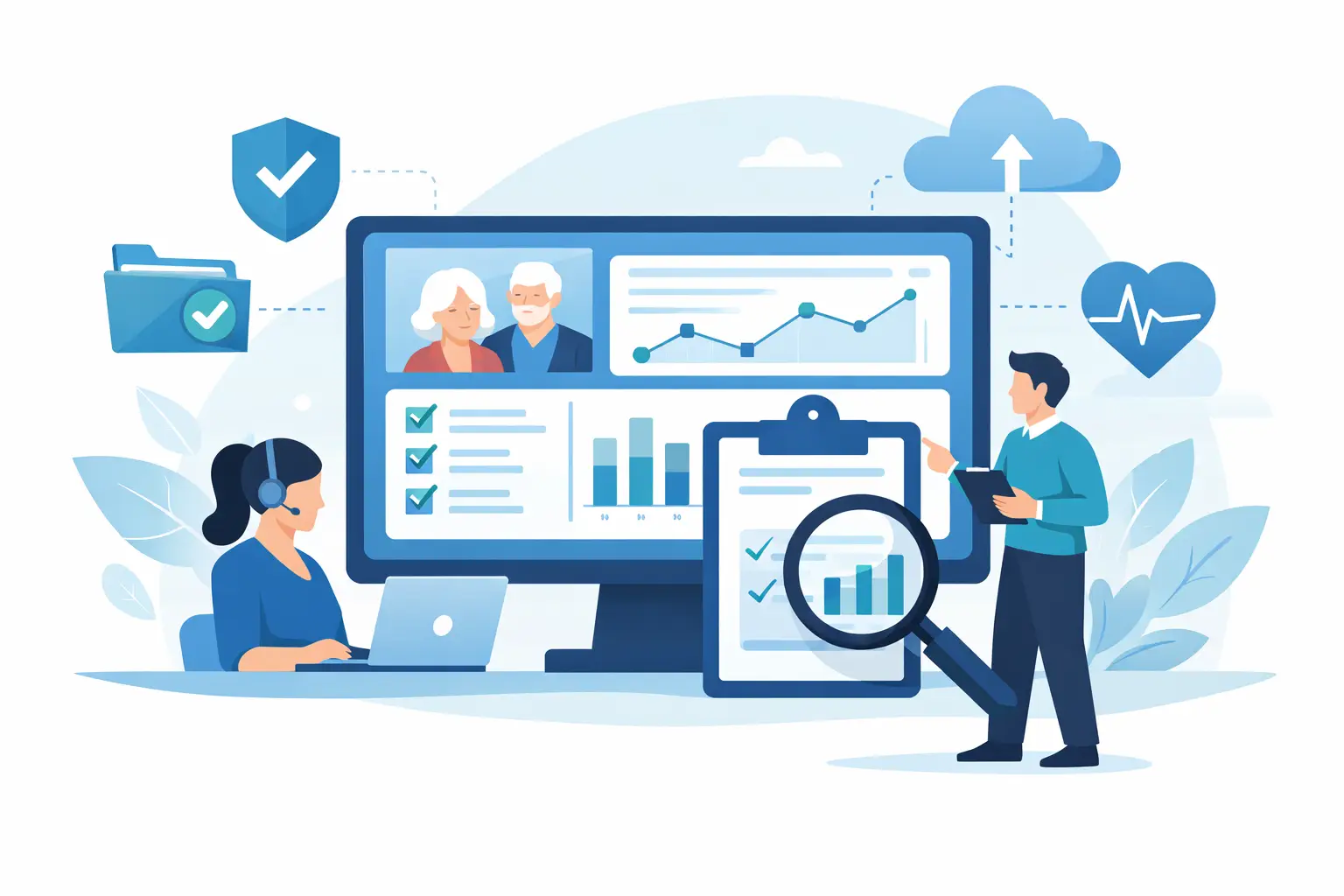
Care supervision software turns real staff conversations into reviewable, audit-ready evidence, helping managers identify risk and protect time every week.
A supervision has just finished. The manager has listened carefully, explored a concern about medication practice, agreed development actions and checked how a staff member is coping. Then comes the familiar second job: turning an hour of conversation into a credible record before the details disappear. Care supervision software should remove that burden, not create another system to feed.
Let's be honest: Supervision 1.0 is broken. Not because managers do not care about good supervision, but because the administrative process asks them to choose between being present in the conversation and spending another 30 to 45 minutes reconstructing it afterwards. Handwritten notes are brief, delayed write-ups lose detail, and generic templates often say little about the actual discussion. During inspection, that leaves providers with records that prove a meeting happened but struggle to evidence the quality of management oversight within it.
Supervision is not a paperwork exercise. It is where managers can hear early signs of burnout, test a care worker's understanding of a medication process, discuss a safeguarding concern or identify training that has not translated into confident practice. Those are governance conversations. They deserve records that are accurate enough to support the person, protect residents and demonstrate effective leadership.
The weakness of conventional documentation is not simply that it takes too long. It also relies on memory, interpretation and time that managers rarely have. A note written three days later may be technically complete, yet omit the wording that explained a concern, the context behind an action or the supervisor's challenge and support. That gap matters when a regulator asks how the service identifies risk, develops competence and follows through.
Good software should preserve the substance of the discussion while reducing administration. It should not replace professional judgement or turn every conversation into an automated compliance score. The manager remains responsible for what is recorded, what action is taken and whether the staff member has been properly supported. Technology's job is to make that work easier to evidence.
The most useful approach follows the natural rhythm of supervision rather than forcing managers through a long digital form. A record-to-report workflow has three practical stages.
The session is recorded with appropriate notice and consent, creating a reliable account of what was actually discussed. Strong speaker diarisation is essential here. It distinguishes the manager from the staff member, so the record can show questions, reflection, support, agreed actions and accountability without guessing who said what.
This is also where confidentiality needs to be designed in, not bolted on later. Adult social care discussions can include sensitive information about residents, colleagues and family circumstances. Care supervision software should screen for resident-confidential information, apply UK data protection controls and give organisations confidence about where recordings and transcripts are held. Convenience is not a reason to lower the standard of confidentiality.
Once recorded, the conversation can be transcribed into a speaker-labelled, verbatim record. This matters because a polished summary alone is not always enough. The transcript provides the underlying evidence, while a structured report makes that evidence usable.
The analysis should map relevant discussion to the framework that applies to the service. For providers in England, that may mean CQC expectations around safe care, effective practice, responsive support and well-led governance. In Wales, Scotland and Northern Ireland, the language and inspection framework differ. A single generic checklist cannot do that work properly.
Regulator-specific mapping helps managers move from broad claims to evidence. Instead of writing that a staff member was reminded about safeguarding, the report can show that they described the reporting route, understood their duty to escalate concerns and agreed a targeted action where confidence was limited. The difference is significant: one is an assertion, the other is a defensible management record.
AI-generated material must be reviewed by a human before it becomes a final staff record. That is not a compromise in the process. It is the safeguard that makes the process trustworthy. A manager can correct context, remove inappropriate detail, confirm actions and ensure the record reflects the conversation fairly.
Following review, a signed PDF report can be produced in minutes rather than at the end of an already stretched day. More importantly, identified issues can be acted on while they are current. If the discussion reveals uncertainty around MAR charts, a missed competency sign-off or a potential safeguarding matter, the manager has a clear prompt to respond rather than relying on an incomplete note being found later.
Inspection readiness is often misunderstood as having a large folder of completed forms. Volume is not the same as assurance. A better question is whether the records show a consistent management cycle: concerns are identified, staff are listened to, actions are agreed, support is offered and follow-up happens.
For example, a domiciliary care worker might explain that a client has begun refusing personal care at certain times of day. A generic template may record “service user concerns discussed”. A useful supervision record captures the worker's observation, the manager's questions about consent and capacity, the agreed escalation route, and whether the care plan needs review. It shows person-centred thinking and risk management in the same conversation.
In a residential setting, a night worker might mention that agency colleagues have not been fully briefed on a resident's moving and handling needs. That is not merely a staffing point. It may indicate a competency, induction and safety issue. Software that highlights the theme enables a manager to decide whether immediate action, a refresher briefing or a wider audit is needed.
The value is not in flagging every keyword. Context matters. A mention of medication may be a positive competency discussion, a training need or an active risk. The system should surface what requires attention, while the manager applies professional judgement to the response.
Some providers are rightly cautious about recording supervision. Staff may worry that it makes a supportive conversation feel formal or that AI will misrepresent them. Those concerns deserve a direct answer, not a sales line.
The quality of implementation matters. Explain why recording is used: to avoid rushed write-ups, represent people's words accurately and free managers to listen. Set clear expectations about consent, access, retention and review. Make it clear that the final record is not published automatically and that staff can see the agreed outcome. When handled well, recording can make supervision feel more respectful because the manager is not constantly looking down to write.
There are situations where recording may not be appropriate, including a sensitive matter requiring a different HR or safeguarding process. Software should support sound decisions, not dictate them. The strongest providers retain clear policies and give managers confidence to use the right route for the issue in front of them.
Before selecting a platform, look beyond transcription accuracy. Ask whether it understands adult social care supervision, maps evidence to the regulator relevant to your nation, supports review before finalisation and handles resident confidentiality responsibly. Check whether its reporting is genuinely grounded in the conversation rather than generated from a template with a few keywords added.
Commercial fit matters too. A small home should not need enterprise-level administration to get value, while a multi-site group needs consistent standards without charging every supervisor as though they were a separate business. Per-service pricing can be more practical because it reflects how care is delivered and managed.
1two.one is designed around this principle: record the real conversation, produce structured evidence, review it with human judgement and act on the issues that matter. For managers, the immediate benefit is time back. For providers, it is a more credible line of sight between staff support, safe practice and governance.
The next time a supervision raises a difficult question, let the manager spend their attention where it belongs: listening carefully, agreeing the right action and following it through. The record should help prove that happened, not become another reason it did not.
Found this useful?
Share it with your network — help another registered manager save an hour today.