


All posts
Can AI Detect Medication Concerns in Care?
Can AI detect medication concerns in supervision? Learn what it can flag, where human judgement is vital, and how clear evidence supports action quickly.
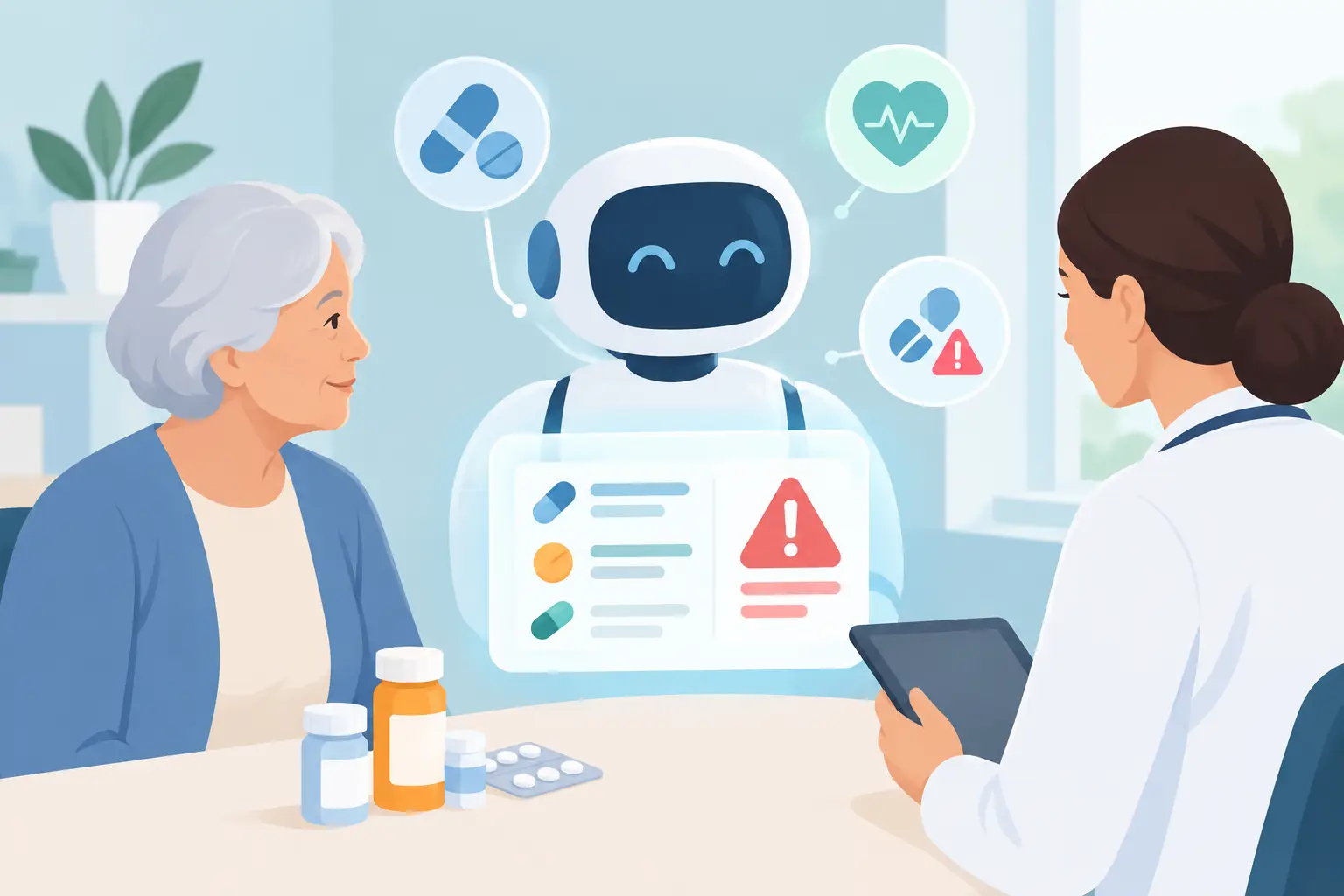
Can AI detect medication concerns in supervision? Learn what it can flag, where human judgement is vital, and how clear evidence supports action quickly.
A staff member says during supervision, “I was not completely sure whether the MAR had been updated after the dose change, so I checked with the senior.” That is not a minor detail to bury in a rushed write-up. It may point to a medication concern, a confidence gap, a handover issue or a process that needs checking. So, can AI detect medication concerns? It can identify language and patterns that deserve attention - but it cannot replace the professional judgement required to investigate and act.
For busy registered managers, that distinction matters. AI should not be positioned as an automated clinical authority. Used well, it is a reliable second set of ears in supervision: capturing what was actually said, highlighting potential risks, and making sure an important disclosure does not disappear into vague notes written three days later.
Yes, AI can screen recorded supervision conversations for medication-related words, phrases and themes, then flag them for human review. It may recognise references to missed doses, uncertainty around administration, stock discrepancies, recording errors, PRN medicines, changes to instructions, competency concerns or escalation that has not yet happened.
The value is not simply keyword spotting. A modern system can consider the surrounding conversation. “I needed to ask for help with the new medication procedure” means something very different from “I have completed my medication competency assessment and feel confident.” Both mention medication, but only one may need follow-up.
That contextual reasoning makes AI useful for governance. It helps managers move from a general sense that something may be wrong to a clear, reviewable prompt: what was said, who said it, when it was discussed, and why it may require action.
However, AI cannot determine whether a medicine has been administered safely, decide whether an incident meets a reporting threshold, or make a clinical judgement. It cannot see the reality of a shift, assess a person’s condition, or understand every local factor behind a member of staff’s wording. Those responsibilities stay firmly with qualified people and the provider’s established procedures.
Let’s be honest: Supervision 1.0 is broken. A manager has a thoughtful, wide-ranging conversation with a colleague, then faces a blank template and an hour of write-up. By the time notes are completed, the detail has softened. Exact wording is replaced with “medication discussed” or “staff member reminded of policy”.
That may look tidy, but it is weak evidence. It does not show what concern was raised, whether the colleague understood the guidance, whether further training was agreed, or whether a manager followed up. During inspection or an internal audit, generic notes create more questions than reassurance.
Medication safety depends on people feeling able to speak candidly. A care worker may disclose uncertainty, explain that a task felt rushed, or admit that they avoided asking a question because the shift was under pressure. These are not necessarily failures by the individual. They can reveal a training need, a supervision need, an unclear process or a culture where escalation needs strengthening.
A good supervision record preserves that context without turning the conversation into a punitive exercise. It supports active listening, fair management and earlier intervention.
When the conversation is recorded with appropriate consent and safeguards, AI can create a speaker-labelled transcript and analyse it against relevant risk themes. It can bring attention to terms such as “missed”, “incorrect”, “unsure”, “dose”, “signature”, “MAR”, “PRN”, “stock”, “refused” and “escalated”. More usefully, it can surface the sentences around those terms.
For example, a manager may be alerted where a staff member says they were unsure how to record a refused medicine, where they noticed a discrepancy but did not know who to tell, or where they have not received an expected competency refresh. The alert is not the conclusion. It is the prompt to ask the next question.
That prompt should lead to proportionate action. In some cases, the manager may confirm that the matter was already resolved and record the reassurance. In others, they may need to check records, speak to relevant colleagues, arrange observed practice, review competency evidence or follow local medication and safeguarding procedures. The response depends on the facts, the level of risk and the individual service’s governance arrangements.
AI should never be used to make automatic allegations about staff, score people as unsafe, or close a concern without human review. False positives are possible, especially where a conversation includes a hypothetical example, a historic event or a colleague describing how they sought help appropriately. The technology must support fair, informed decisions rather than shortcut them.
The strongest workflow is straightforward. First, conduct supervision properly: be present, listen carefully and give the staff member space to reflect on their work, confidence and development. The quality of the conversation still comes first.
Second, capture an accurate record. Ambient AI can produce a verbatim transcript with clear speaker diarisation, so the manager is not trying to reconstruct a sensitive conversation from memory. Good systems should also screen for resident-confidential information and protect data using UK-appropriate security controls.
Third, analyse and review. The system can map discussion points to the regulatory framework that applies to the service, whether that is CQC, CIW, the Care Inspectorate or RQIA expectations. Potential medication, safeguarding, training and competency concerns can then be presented clearly for the manager to assess.
Finally, the manager reviews the draft, corrects anything necessary, agrees actions with the staff member and finalises the signed record. That human review stage is not an inconvenience. It is the control that turns a useful AI prompt into defensible management evidence.
This approach avoids the false choice between thorough supervision and getting back to the service. Rather than spending around 45 minutes writing up a one-hour session, managers can focus their time on the part that needs them: listening, questioning, coaching and following through.
A transcript alone is not compliance evidence. Neither is a generic summary produced without understanding the environment in which adult social care operates. Managers need to show that concerns were identified, discussed, acted on and revisited in a way that aligns with the expectations placed on their service.
That is why framework-aware analysis matters. A medication confidence issue may connect to safe practice, staff competence, supervision, learning culture and governance. The goal is not to force every conversation into a compliance box. It is to make the evidence already present in the conversation easier to find, review and demonstrate.
For multi-site providers, this also creates a clearer view of emerging patterns. One isolated comment may be resolved locally. Similar comments across several services may show a wider issue with induction, training, documentation or management oversight. AI can help leaders spot that pattern earlier, provided they retain the discipline to examine the evidence rather than rely on a dashboard alone.
Not all AI tools are suitable for sensitive supervision records. Before introducing one, providers should ask whether recordings are encrypted, where data is stored, how access is controlled, whether transcripts separate speakers accurately, and how resident-confidential information is handled. They should also be clear about retention, consent, staff communication and the process for correcting a record.
Ask how the tool identifies concerns. Does it merely search for medication words, or can it distinguish between a resolved discussion and an unresolved risk? Can managers see the source wording behind an alert? Is there a mandatory human review before records are finalised? If the answer is no, the tool may create more governance risk than it removes.
1two.one is designed around this principle: convert the actual supervision conversation into structured, regulator-aware evidence, while keeping the manager in control of review and action. The aim is not to automate accountability. It is to remove the administrative drag that prevents good accountability from happening consistently.
Medication concerns rarely announce themselves as neat incidents. They often begin as a hesitant sentence in a supervision conversation. Give managers the time and evidence to hear that sentence properly, test what it means, and act before uncertainty becomes harm.
Found this useful?
Share it with your network — help another registered manager save an hour today.